Focus: Character formation risks + virtue development opportunity
February 14, 2026
Parents often focus on what AI does to grades and homework, but underneath is a deeper question: what kind of person is my child becoming through their daily technology habits? Do they practice honesty when no one is looking? Do they take pride in earned work, or quietly feel like imposters because a machine did most of it?
The Problem: Invisible Character Drift
California’s new AI guidance emphasizes ethical use, academic integrity, and involving students in setting responsible-use norms. This is an important step, but many implementations focus on technical safeguards—detection tools, acceptable-use policies—rather than the inner habits students form. At the same time, broader research on youth and technology points to an “attention paradox”: constant exposure to fast, AI-mediated content and assistance can shorten attention spans and weaken resilience in the face of difficulty. Over years, this does more than change cognitive performance; it shapes character.
When students learn that they can pass an assignment by pasting AI output, or that it’s normal to rely on automated help for every challenge, they internalize a silent lesson about who they are. Integrity becomes negotiable, Honesty becomes optional, Pride becomes detached from real achievement, and Productiveness is redefined as “getting things done” rather than creating genuine value. Even in schools that talk about ethics, if the daily structure rewards speed, convenience, and appearance over effort, reality-based thinking, and persistence, character formation bends in the wrong direction.
The Structural Constraint: Policy Without Daily Practice
Large public systems can—and increasingly do—issue statements about ethical AI use, digital citizenship, and academic honesty. But with thousands of students, multiple campuses, and significant staff turnover, it is extremely difficult to translate those aspirations into consistent daily practice. Teachers may not have the time or training* to weave virtue language into every AI interaction, and enforcement often defaults to catching “cheating” rather than guiding character growth.
Moreover, age-graded structures and rigid pacing leave little room to pause a lesson and address the moral dimension of a student’s AI choice. If the primary pressure is covering curriculum for an entire grade level, conversations about what kind of person a student is becoming through their use of AI can feel like a luxury. The system ends up with policy-level ethics and classroom-level pragmatism.
Cambrian Academy’s Approach: The Seven Virtues as Daily Compass
Cambrian Academy was built on the belief that learning is a moral act: every step of genuine understanding requires a choice to engage reality honestly. Our Seven Virtues framework translates that belief into concrete guidance for AI use. For example:
- Rationality: Students ask, “Am I using this tool to see facts more clearly, or to avoid confronting them?”
- Honesty: They maintain an “AI Assistance Log,” distinguishing what AI contributed from what they did, and they learn why pretending otherwise damages their own mind.
- Independence: Before using AI on a major task, students must demonstrate they can perform the core thinking on their own, establishing a baseline of genuine competence.
- Integrity and Pride: We celebrate “struggle victories”—moments when a student persists through difficulty without AI—so they feel the difference between earned confidence and borrowed polish.
Our small size and intimate classes let teachers act as true epistemological and moral guides. When a student is tempted to let AI write the hard paragraph, there is time for a conversation: “What does it do to your character if your proudest work isn’t really yours?” Students are not shamed; they are invited to see themselves as young people capable of Rationality, Justice, and Productiveness—and to use AI in ways that reinforce that identity.
We also shape the environment. Phone and device boundaries protect attention so that deep work remains possible. AI is introduced gradually, with clear protocols that always tie back to virtues and to the central purpose of education: to train the mind to live in reality with confidence and clarity.
Call to Reflection
When you picture your child at eighteen, do you see someone who can focus, think independently, and stand by their own work with quiet pride? Or someone who feels lost without a device and unsure which accomplishments are truly theirs? At Cambrian Academy, we believe AI can help form the first kind of graduate—but only if character and virtue stay at the center of every decision.
Moving Education in the Right Direction
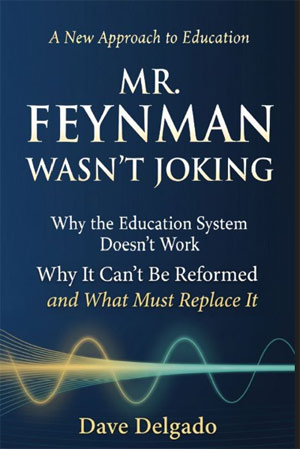
This isn't as easy as electing new school board members or adding layers of reform. To understand why the system cannot be reformed and what must replace it, listen to the free audio book version of Mr. Feynman Wasn't Joking, then learn more on the partner Substack.
*At Cambrian Academy, teachers receive ongoing training. In addition to the periodic staff meetings, teachers receive articles with practical applications consistent with our Philosophy of Education, as well as a daily morning email with examples of how to integrate the Seven Virtues into daily lessons. We already have an extensive data space that uses AI to help teachers check their lessons for consistency with all policy implementations.
© Cambrian Academy,LLC. All Rights Reserved.
Some articles have been modified by AI for clarity and brevity.